Securing a professional pest control service in Memphis protects residential and commercial structures from intense biological pressures driven by high ambient humidity and alluvial soil conditions. DesertBloom Pest Defense delivers systematic barrier establishment, targeted interior eradication, and permanent structural exclusion across Shelby County.
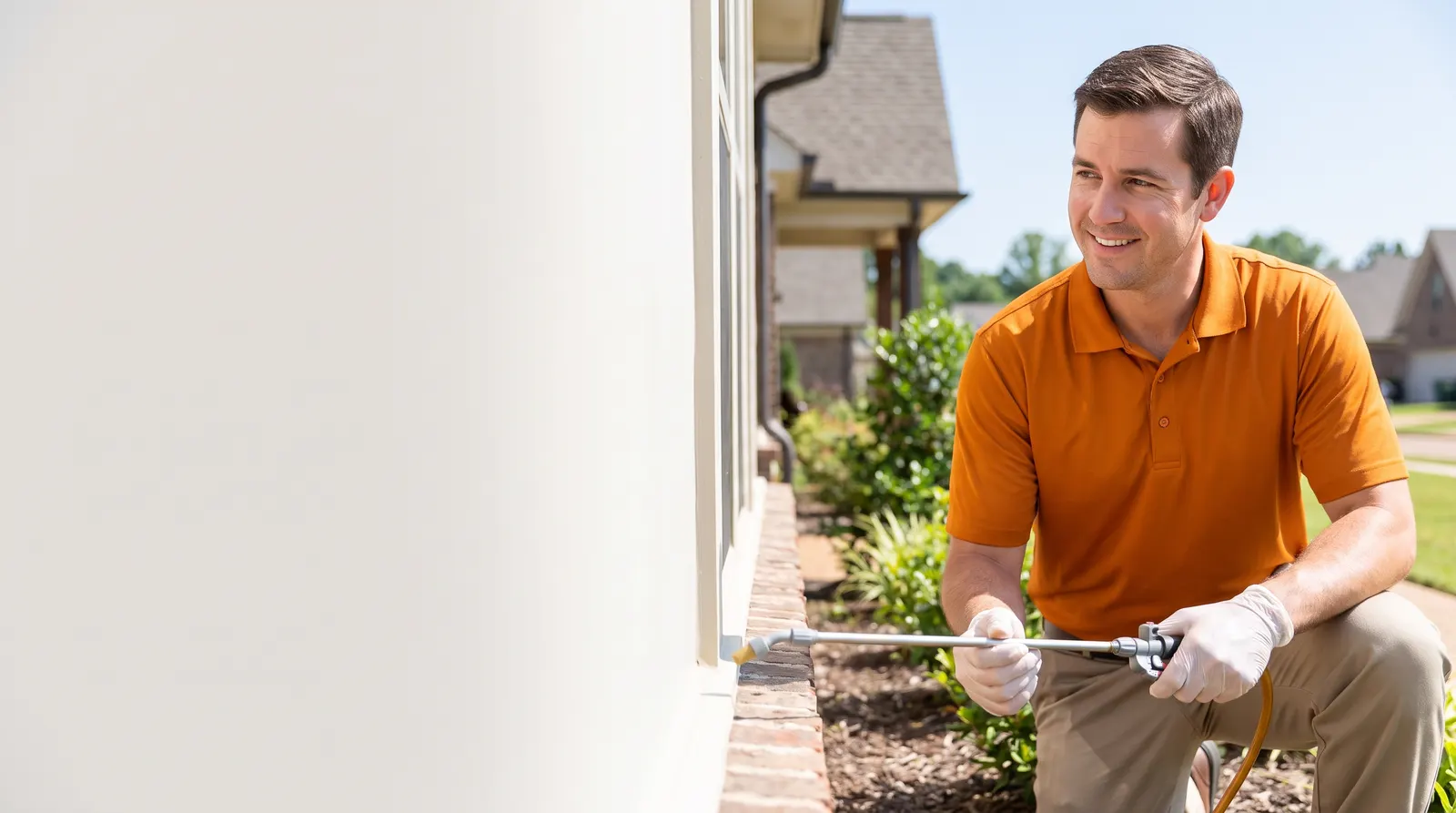
A professional pest control service in Memphis is an objective biological management operation that identifies, isolates, and eliminates wood-destroying, disease-carrying, and structural insect and rodent populations across Mid-South properties.
Every service reflects the same meticulous attention to detail, whether it's a single job or a larger pest control sevice project across Memphis.
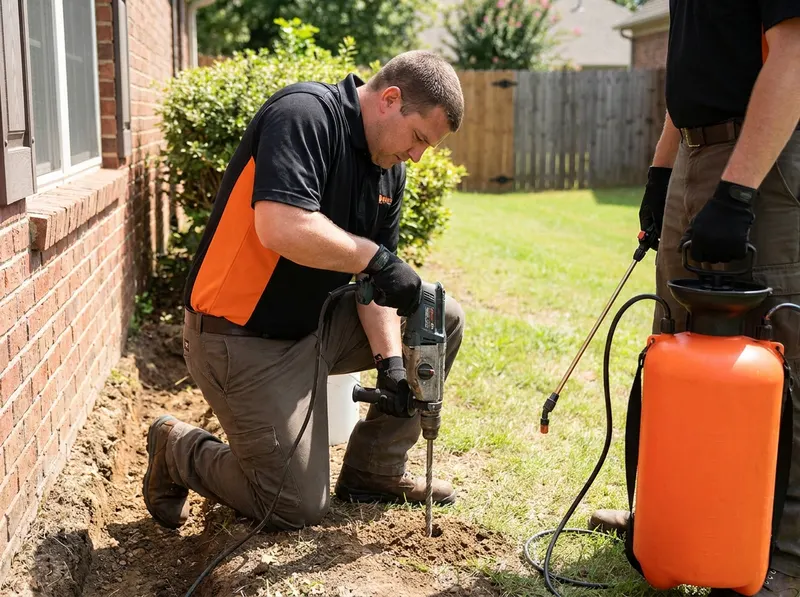
Subterranean termite defense isolates residential structures from soil-dwelling Reticulitermes flavipes colonies common in Shelby County clay loam. Field technicians trench foundation margins to depths of six inches and drill designated slab areas to establish continuous liquid termiticide barriers compliant with Tennessee Department of Agriculture structural pesticide rules, preventing cellulose consumption inside structural sill plates and band joists. Liquid non-repellent fipronil formulations transfer horizontally through worker populations during social grooming, systematically terminating the central reproductive queen.
Get a quote →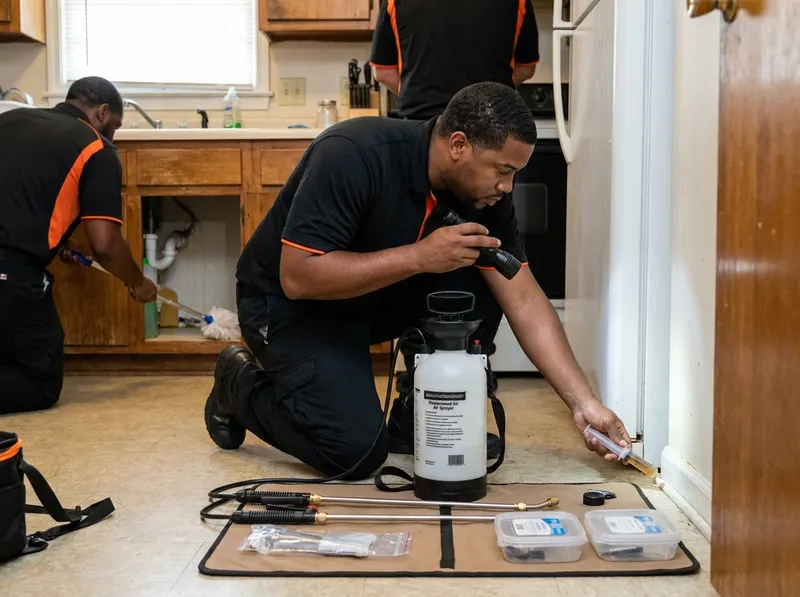
German cockroach cleanouts target high-density nesting aggregations inside kitchen cabinet joints, appliance motor housings, and utility plumbing chaseways. Eradication plans deploy low-volatility gel baits, non-repellent contact sprays, and insect growth regulators evaluated under EPA pesticide safety standards to arrest nymphal molting cycles without releasing airborne aerosols into living spaces. Systematic monitoring using pheromone glue boards tracks population reductions across 14-day reproductive hatch windows until complete zero-catch verification is achieved.
Get a quote →
Bedbug eradication combines focused mechanical suction, high-temperature heat application exceeding 125 degrees Fahrenheit, and targeted desiccant dust injections into wall voids, baseboards, and bed frame assemblies. Technicians systematically eliminate active nymphs and adult Cimex lectularius populations to stop nocturnal blood-feeding without staining finished textiles. Specialized applications comply with structural sanitation standards defined by the CDC Parasitic Diseases Division , neutralizing insecticide-resistant strains through direct physical lipid-layer dehydration.
Get a quote →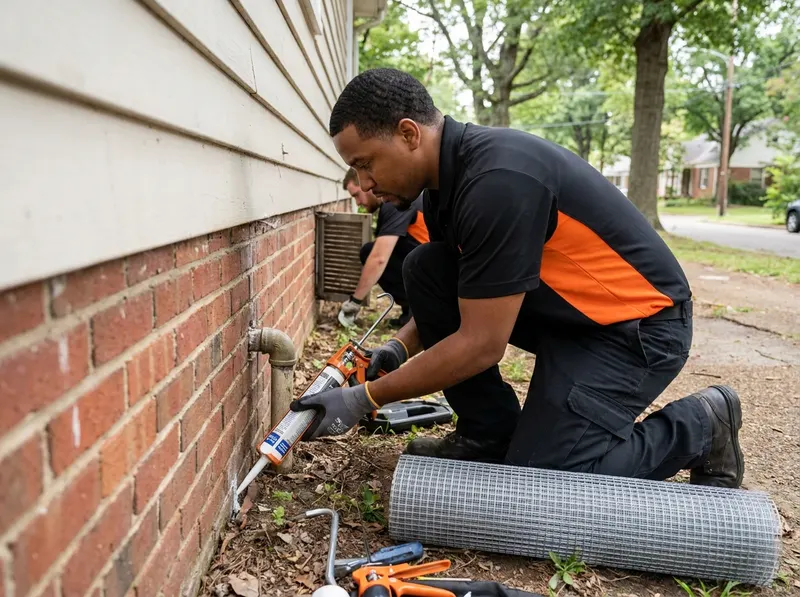
Rodent defense stops Mus musculus and Rattus norvegicus intrusions by sealing structural entry holes measuring one-quarter inch or greater using galvanized steel mesh and expanding silicone seals. Operations deploy tamper-resistant exterior baiting stations and mechanical interior snap traps managed according to CDC rodent control guidelines to prevent disease transmission, insulation fouling, and electrical fire hazards from gnawed Romex wiring. Every perimeter point where air conditioning lines, gas conduits, and plumbing pipes penetrate masonry is reinforced against repeat gnawing.
Get a quote →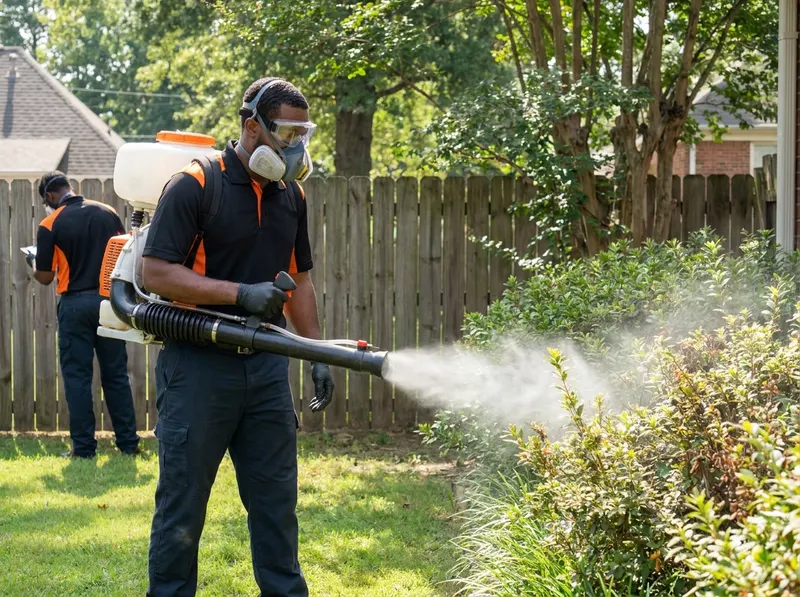
Outdoor perimeter barrier misting treats dense landscape foliage, damp shaded turf, and low-hanging tree canopies where invasive Aedes albopictus mosquitoes harbor during daylight hours. High-pressure backpack misting systems deposit microscopic microencapsulated droplets onto the undersides of broadleaf shrubs, disrupting adult resting sites for up to 28 continuous days. Technicians apply bacterial Bacillus thuringiensis israelensis larvicides into standing drainage areas in accordance with EPA mosquito habitat management guidance to halt pupal emergence.
Get a quote →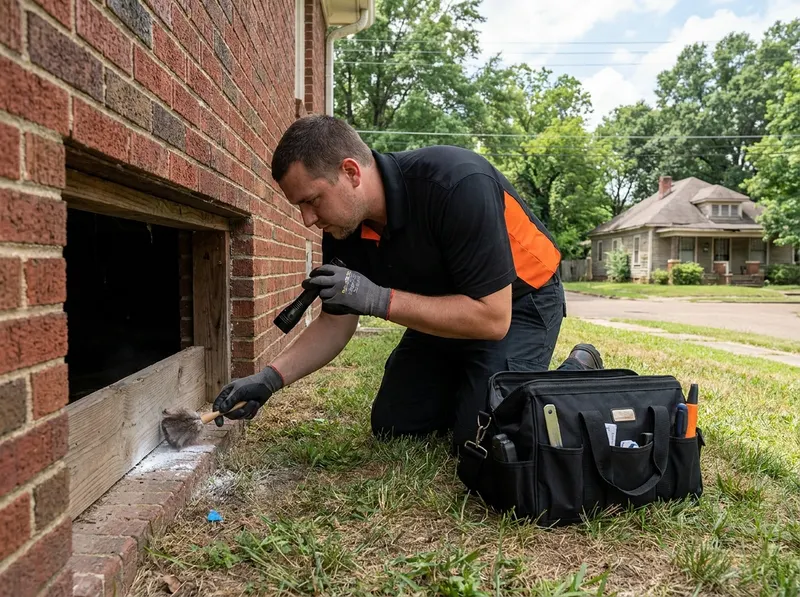
Brown recluse suppression targets Loxosceles reclusa populations sequestered within dark attics, cardboard storage boxes, wall cavities, and crawlspaces common throughout the Mid-South. Remediation deploys electrostatically charged micro-dusts inside dead-air voids, paired with wide perimeter barrier sprays and high-tack capture grids placed along structural wall-floor junctions. Because predatory spiders forage along floorboards rather than cleaning their tarsi like insects, treatments emphasize dense placement of contact-residual deposits across known migration paths.
Get a quote →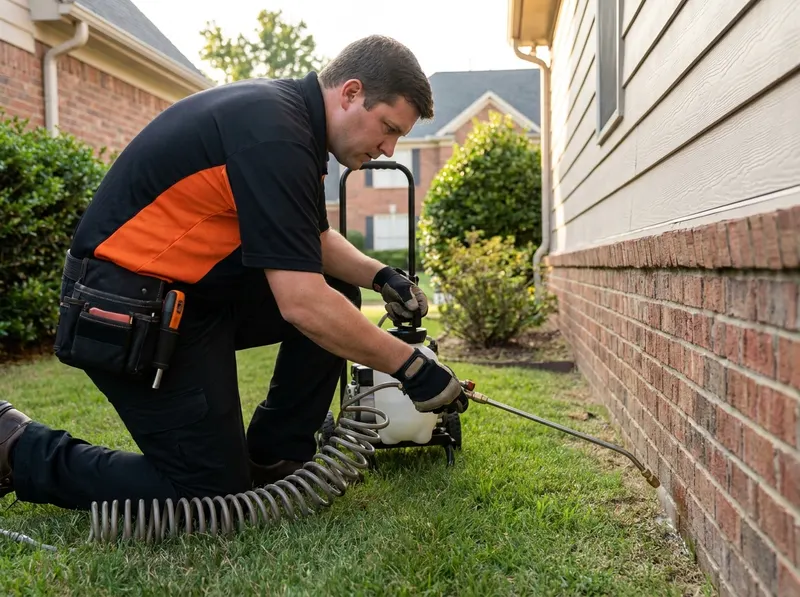
Quarterly preventative maintenance establishes a three-zone biological defensive shield around exterior foundation footings, masonry weep holes, window wells, and under-soffit eaves. Rain-resistant, polymer-enhanced microencapsulated formulations bond to masonry and porous clay soils to block centipedes, earwigs, crickets, and foraging ant colonies from migrating indoors. The maintenance program includes manual de-webbing of exterior entrance alcoves and sweeping crawlspace vents clear of pest debris to eliminate structural entry scent trails.
Get a quote →Crawlspace environmental remediation addresses wood-decay fungi, dampwood insect activity, and sub-floor pest harborage fueled by high ground moisture and humid ambient river air. Technicians install high-mil polyethylene soil vapor barriers, mechanically seal foundation vents, and apply targeted borate wood preservatives aligned with HUD housing quality standards to protect framing timbers. Mitigating excessive sub-floor humidity removes the moist micro-environment required by subterranean termites, silverfish, and wood-boring powderpost beetles.
Get a quote →You get a firm, itemized quote for your pest control sevice before any work begins, no surprises, no pressure.
Careful prep, tidy work, and a full cleanup when we are done. We treat your home and belongings like our own.
The same trusted, background-checked team from the first call to the final check.
Selecting professional biological remediation requires balancing target pest biology, structural construction type, and application persistence across distinct building envelopes. org/">National Pest Management Association. If pervasive interior populations such as German cockroaches or bedbugs infest finished wall voids and cabinetry, property owners must choose targeted insect growth regulator applications combined with particulate dusting rather than generic perimeter sprays.
The trade-off centers on application placement and disruption: intensive interior remediation requires extensive preparation of living spaces, furniture disassembly, and mechanical access, whereas exterior perimeter defense focuses exclusively on exterior foundation bands, eaves, and entry thresholds. For crawling arthropods in raised foundation homes common throughout older Mid-South historic districts, crawlspace encapsulation, ground-cover moisture barriers, and vapor barrier misting provide long-term prevention; slab-on-grade suburban foundations require continuous sub-surface perimeter chemical barriers to prevent expansion joint penetration. If biting exterior vectors such as Aedes albopictus threaten outdoor living zones, property owners choose focused misting and biological larvicides targeting standing surface water, while structural pest pressures demand structural exclusion sealing every gap greater than one-quarter inch.
Choosing targeted spot treatments minimizes upfront costs starting at the $150 baseline, while comprehensive structural exclusion requires greater physical modifications to seal utility penetrations and masonry weep holes, raising initial investment up to $875. If localized rodent activity emerges inside dropped ceilings, mechanical trapping paired with exterior hardware-cloth screening solves the entry pathways; relying solely on exterior baiting without physical exclusion allows persistent ingress as temperatures fall each autumn.
Every project gets a firm, written price after a free on-site visit. Ranges below for orientation.
Tell us about your pest control sevice job and we'll send a clear, written quote, usually the same day. Or just call and talk to a real Memphis pro.
(901) 749-8050
Properties located along the Wolf River Greenway, near Shelby Farms Park, and throughout the floodplain corridors of the Mississippi River face elevated biological pest pressures generated by high water tables and fertile alluvial silt soil deposits. Historic residential architecture throughout Central Gardens, Cooper-Young, and Midtown frequently utilizes brick pier-and-beam foundations that enclose unconditioned, high-humidity crawlspaces. These shaded, damp sub-floor voids maintain ambient relative humidity levels above 70 percent, creating optimal reproductive microclimates for subterranean termites, wood-destroying powderpost beetles, and smokybrown cockroaches. Across suburban slab-on-grade developments in East Memphis, Cordova, and Raleigh, shifting clay sub-soils create foundation settlement cracks and separation gaps around exterior plumbing lines, giving invasive Argentine ants and Norway rats direct subterranean access points. Furthermore, the Mid-South's prolonged subtropical summer season, characterized by consecutive months with temperature indexes exceeding 90 degrees Fahrenheit and heavy convective rainfall, rapidly degrades generic pesticide applications, demanding high-durability microencapsulated barrier formulations engineered to adhere to porous brick, concrete footings, and saturated perimeter topsoils without leaching into local stormwater watersheds.
Free estimates for Memphis & the surrounding area.
 DesertBloom Pest Defense